

Ingredients
Method
Step 1: Create Your Sugar Cookie Crust Foundation
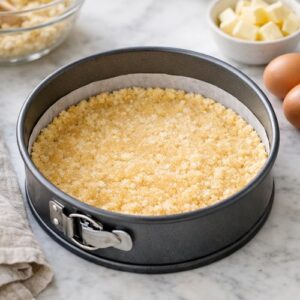
- Start by making your crust, which needs to bake before you add the filling. Preheat your oven to 350°F and line a 9-inch springform pan with parchment paper on the bottom (this prevents sticking and makes removal easier). In a medium bowl, combine your flour, powdered sugar, and salt. Using a pastry cutter or your fingertips, work the cold butter cubes into the flour mixture until it resembles coarse breadcrumbs with some pea-sized pieces remaining. This is crucial—you want visible butter pieces because they create those tender, flaky pockets. Add the milk one tablespoon at a time, stirring gently until the dough just comes together. Don't overmix. Press this mixture firmly and evenly into the bottom of your prepared pan, creating an even thickness about ¼-inch thick. Use the bottom of a measuring cup to press it down uniformly. Prick the surface all over with a fork to prevent puffing. Bake for 12-14 minutes until pale golden. You're not looking for dark browning—just a light tan color. Remove and let cool while you prepare the filing.
Step 2: Prepare Your Sugar Cookie Frosting Layer
- While the crust cools, make the sugar cookie frosting that goes between the crust and filling. This is what gives you that distinctive "sugar cookie" flavor and texture. In a bowl, beat the softened butter with ½ cup of your granulated sugar until light and fluffy, about 2 minutes. Add the milk and vanilla extract, beating until combined. In a separate small bowl, whisk together your flour and salt. Fold this dry mixture into the butter mixture gently until just combined—don't overmix. Fold in your rainbow sprinkles last, being careful not to crush them. The sprinkles should remain whole and visible because they add visual joy and little pops of flavor. Spread this frosting layer evenly over your cooled crust in a thin, even layer—think ¼-inch thick. This creates the signature sugar cookie surprise in the middle of your cheesecake.

Step 3: Bring Cream Cheese to Perfect Softness
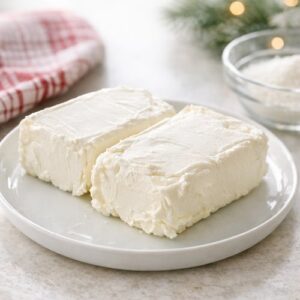
- This step determines everything. Remove your cream cheese from the refrigerator and let it sit at room temperature for a full 30 minutes. It should be soft enough that your finger leaves a slight indent, but not so soft that it's beginning to separate or look greasy. Cut each block into 8 pieces using a hot, dry knife (run it under hot water and wipe dry between cuts). This helps the cream cheese incorporate smoothly and prevents overmixing, which creates air pockets and cracks.
Step 4: Create the Silky Cheesecake Filling
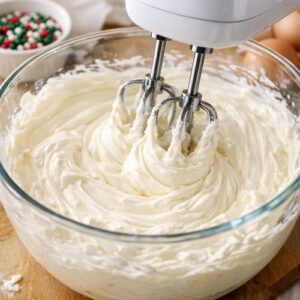
- Using an electric mixer on medium-low speed, beat the cream cheese pieces together for about 1 minute until smooth and creamy. Don't rush this or go faster—slow and steady prevents excessive air incorporation. Add your sugar gradually, about ¼ cup at a time, beating for 30 seconds between additions. This slow incorporation ensures the sugar fully dissolves and prevents lumps. Add your flour, vanilla extract, and almond extract, beating on low speed until just combined. Stop as soon as everything is mixed—overmixing is what causes cracks because you're incorporating too much air. Add your sour cream in three additions, beating gently after each addition until just combined. Make sure everything is at room temperature or the sour cream will create lumps in the cold cheese. Finally, add your eggs one at a time, beating on low speed for about 10 seconds after each egg. This final step requires restraint—you want the filling to look almost glossy and thick, not fluffy or aerated.
Step 5: Pour and Bake Without Fear
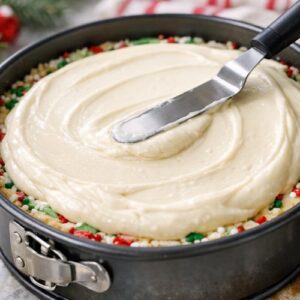
- Preheat your oven to 325°F. Pour the cheesecake filling over your sugar cookie frosting layer, spreading it gently with an offset spatula to create an even surface. Here's the restaurants' secret that changed my baking: bake at a lower temperature (325°F instead of the typical 350°F) for a longer time. This creates a gentler baking environment that prevents the top from cracking. Place your cheesecake on the center rack. Bake for 55-65 minutes. The cheesecake is done when the edges are set but the center still has a tiny jiggle—about 2 inches in diameter in the very middle. If you use a toothpick test, it should come out clean or with just a few moist crumbs, not wet batter. Remove from the oven and let it cool in the oven with the door propped open for 1 hour. This gradual temperature change prevents the dramatic cooling-related cracks. Then remove it completely and let it cool to room temperature, about another hour.
Step 6: Chill, Then Top With Frosting
- Refrigerate your cheesecake for at least 6 hours, preferably overnight. The flavors meld beautifully during this time, and the texture becomes perfectly creamy rather than slightly grainy. When ready to serve, prepare your vanilla cream frosting. Beat your softened butter and sour cream together until light and fluffy, about 2 minutes. Add your sifted powdered sugar gradually, beating until smooth and spreadable. Add vanilla extract and beat for another 30 seconds. Spread or pipe this frosting over the top of your chilled cheesecake, creating whatever pattern makes you happy. Top with additional rainbow sprinkles. The frosting tastes better when applied to a cold cake because it provides beautiful definition and doesn't melt into the surface.